The very finest feeds make the very finest food
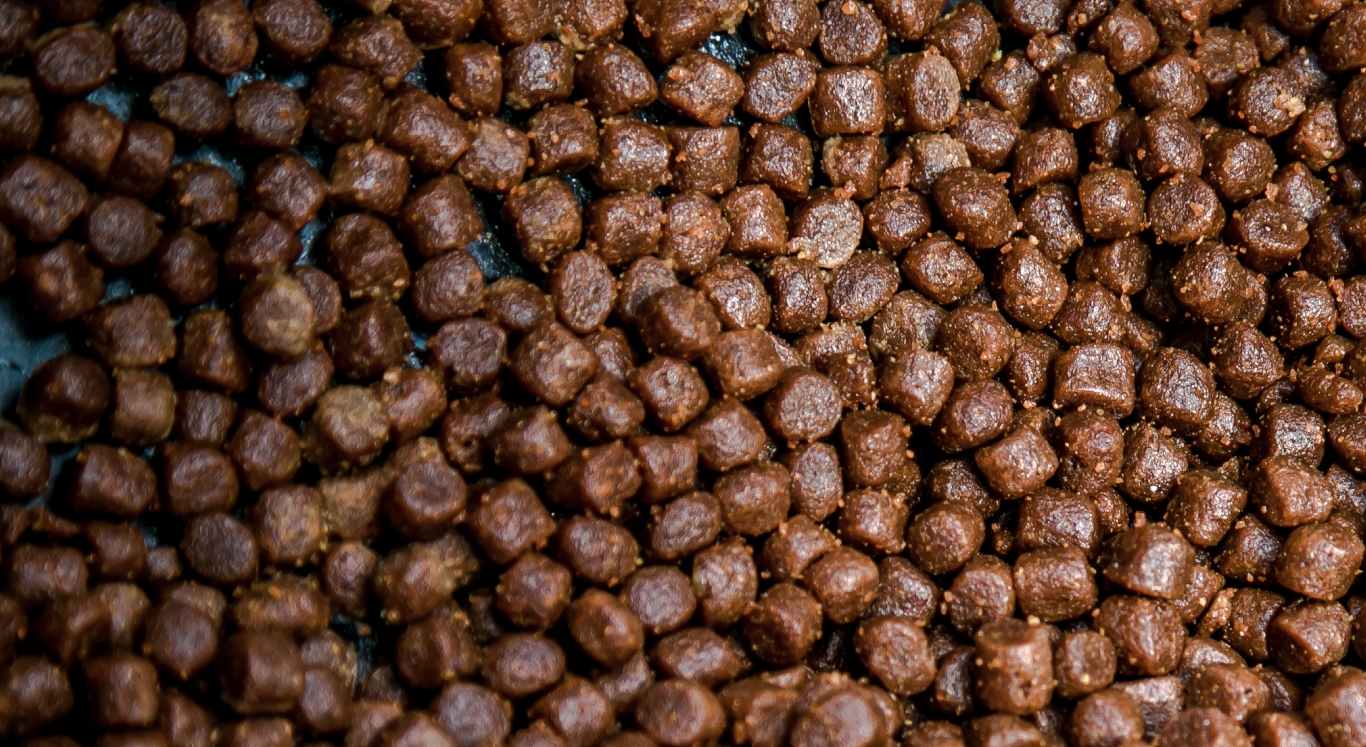
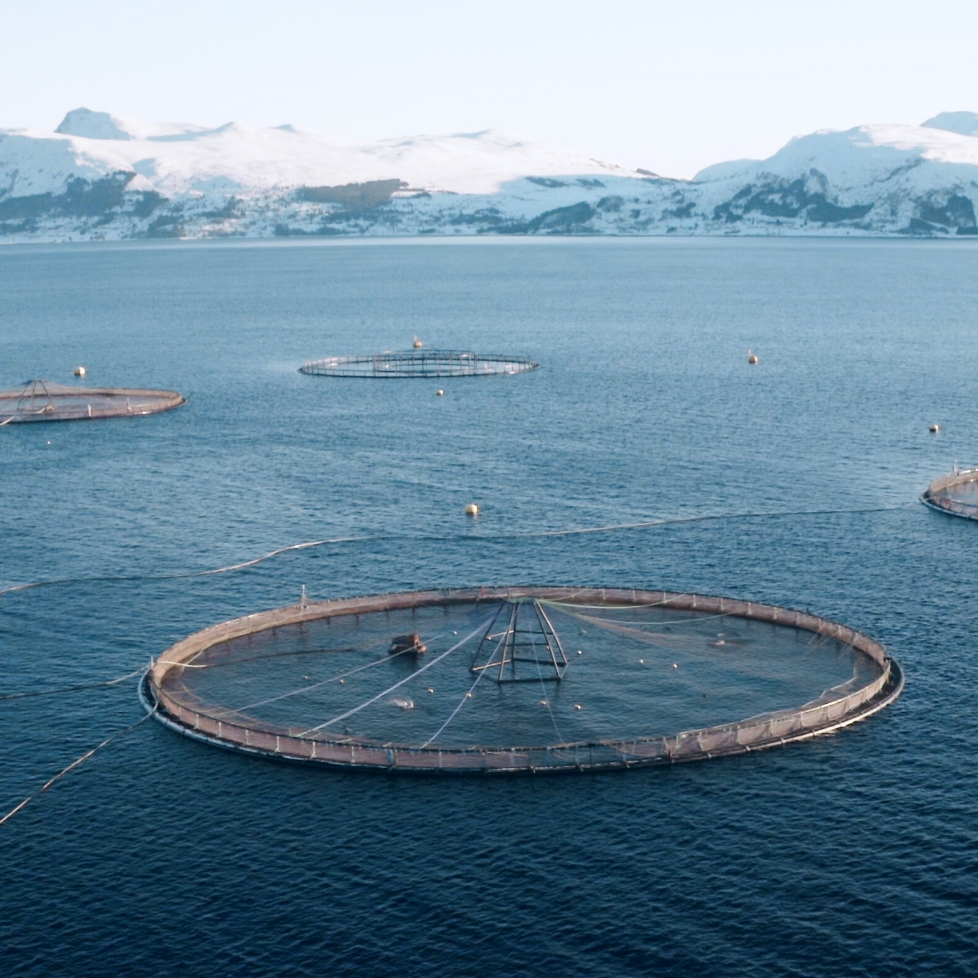
We have devoted our resources to set new standards in the diet we feed our salmon and ensure they provide the perfect food for you.
No one knows our fish better than we do. We develop and manufacture our own salmon feeds to ensure they get exactly the right nutrients to thrive at every stage of their life cycle. Our unique processes minimise any traces of human pollution and, because we control exactly what goes into our feed, we can ensure that it sets the very highest standards of quality and sustainability. Even the ingredients that provide Mowi salmon with their amazing colour are produced to mimic nature – perfectly replicating the carotenoids wild salmon consume in the sea.
Because the resources that go into our salmon feed are precious, we ensure that as little as possible is wasted. As well as perfecting what we feed our fish, we deploy sophisticated technology to refine how we feed them, so they get exactly what they need, precisely when they need it.
Salmon are among the world’s most efficient animals at converting nutrition into muscle and protein. Helping them to do that as productively as possible is what makes our salmon one of the world’s most sustainable foods.
Our uncompromising approach guarantees that the Mowi salmon on your plate will always be as tasty and nutritious as humanly possible.
2021 Feed Volume
-
Fish in-Fish out (FIFO)
0,8 kg -
rFIFO
0,68 kg -
Feed Raw Materials Certified
100 % -
Deforestation Free Soy
100 %
By making our own salmon feed, we are creating a better future for everyone
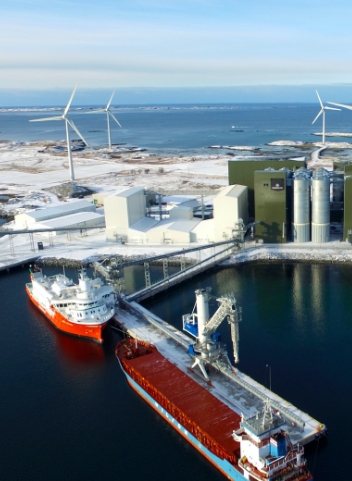
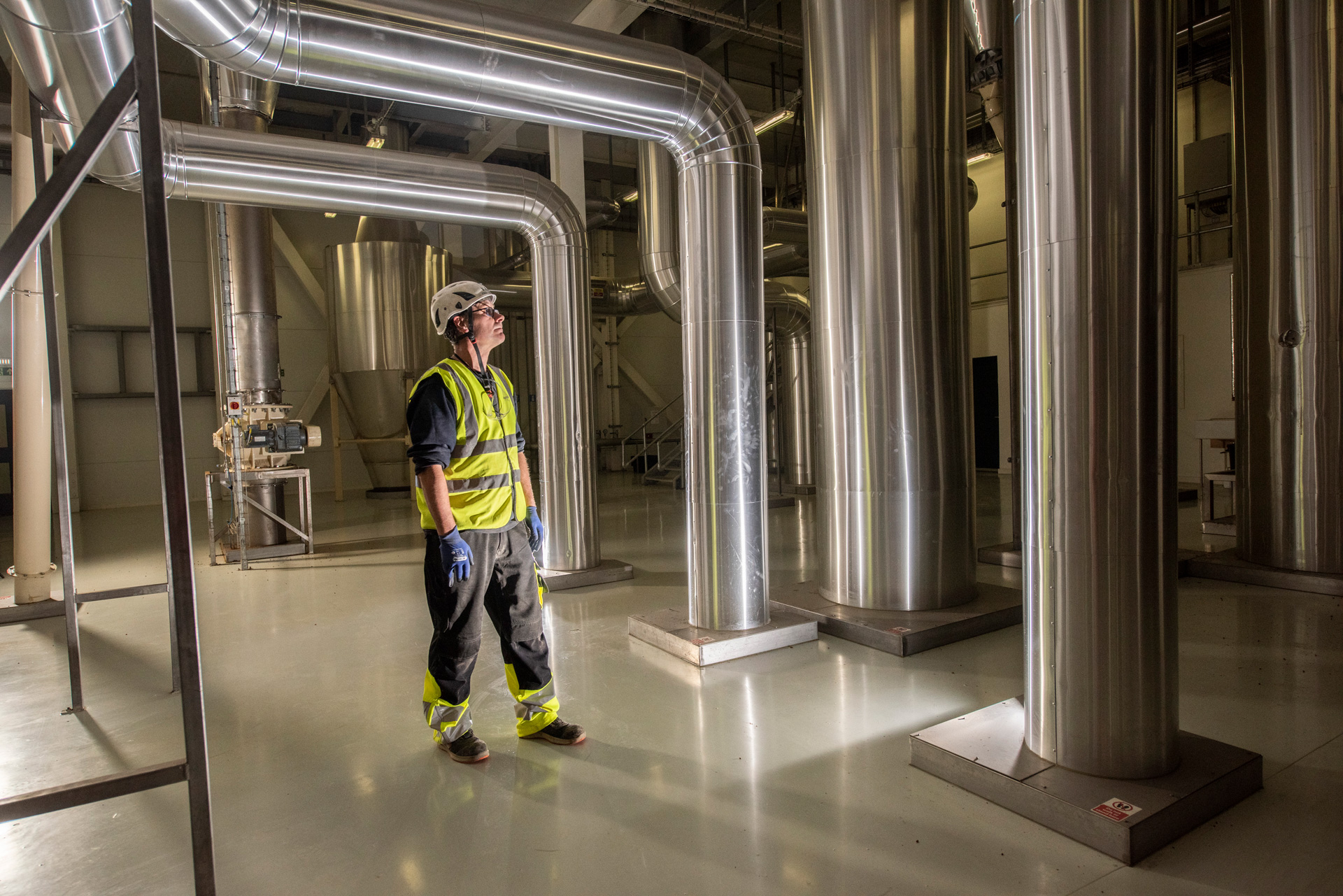
Mowi is the only salmon company in the world with their own, large-scale integrated salmon feed production facilities. Our state-of-the-art feed mills can produce 640,000 tonnes of premium salmon feed each year. This makes us self-sufficient across most of our operations and guarantees that our feeds meet the exceptional quality standards we demand.
We have chosen to do this for several important reasons:
- It allows us to create the most sustainable and nutritious salmon feed on the planet.
- It allows us to explore the most effective nutrients to optimise the diet of our fish, so they are fit, healthy and achieve high growth rates.
- It allows us to be responsive – adjusting diets in line with different environments and the feedback from the research teams monitoring the health, well-being and performance of our salmon.
- It means we can explore novel ingredients and use our own data to ensure there is clear evidence of their effectiveness and potential for the future.
- It means our supply chain is safe, consistent and secure and it gives us the power to influence our suppliers to behave more sustainably and only select new suppliers who maintain the highest standards.
The best FIFO ratios on the planet
FIFO stands for Fish In: Fish Out. Big fish eat smaller fish. That’s natural. And, in the wild, salmon will enjoy a varied diet that may include crustaceans, eels, smaller fish and squid. One of the criticisms of farmed salmon has been that more wild fish go in to feed the salmon than the fish coming out of the salmon farm. This is no longer true, and our feeds are achieving FIFO ratios that make our farmed salmon one of the most sustainable animal proteins on the planet.
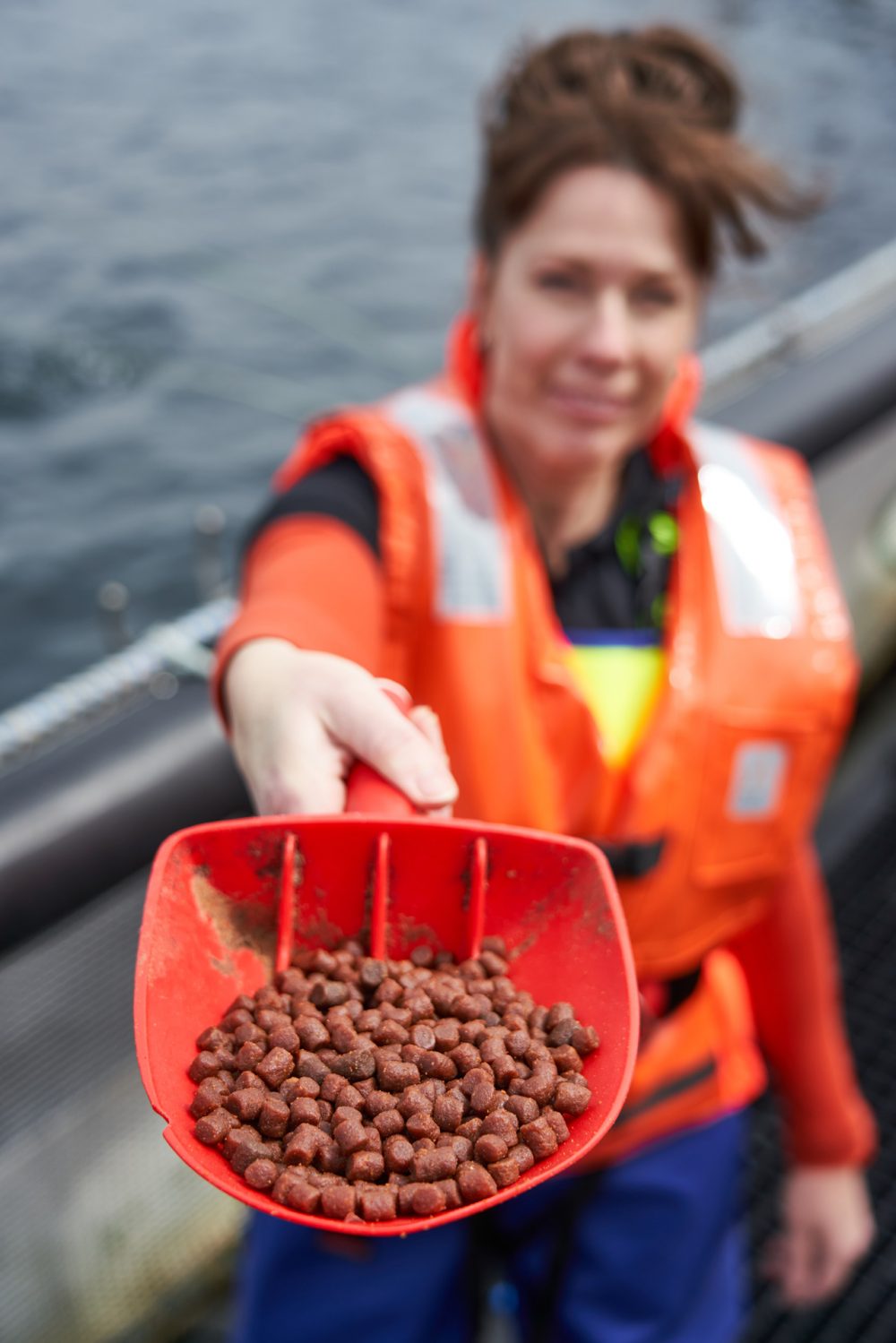
Replicating the diversity of the wild salmon’s diet means that our salmon feed must contain fish, but we have perfected feeds that use as little wild fish as possible. The current contents of our feed now mean that it takes only 680g of wild fish to produce 1kg of salmon. Our feeds now include vegetable proteins from legumes, and we are going to great lengths to increase the proportion of fish meal and oil from sustainable sources. 32% of the fishmeal and 18% of the fish oils used to make our feed, now come from by-products of fish processing activities which are not suitable for human consumption and would otherwise go to waste.
Our FIFO rate actually falls to just 0.68 when you consider the fact that we recapture the by-products of our own salmon processing activities to create fresh fishmeal and oil to be used in feed for other farmed fish species. This means that we are creating 1kg of fish for every 0.68 kg we use.
Setting new standards for sustainable ingredients
Because we produce so much feed, we have real power to ensure that what goes into our feed is produced to the highest sustainability standards. We took the initiative to go to Brazil to set up a dialogue with suppliers and work with WWF Brazil to guarantee robust monitoring processes. Our lead here has set new standards for deforestation-free soybean production. By setting higher standards here, we have helped drive more widespread improvements across the entire soybean supply chain.
The wild fish that goes into our salmon feeds are selected using the most stringent criteria to ensure they only come from sustainable stocks and that they are fished in strict accordance with global guidelines and our own, rigorous, sustainability standards.
Achieving the lowest levels of toxins and pollutants
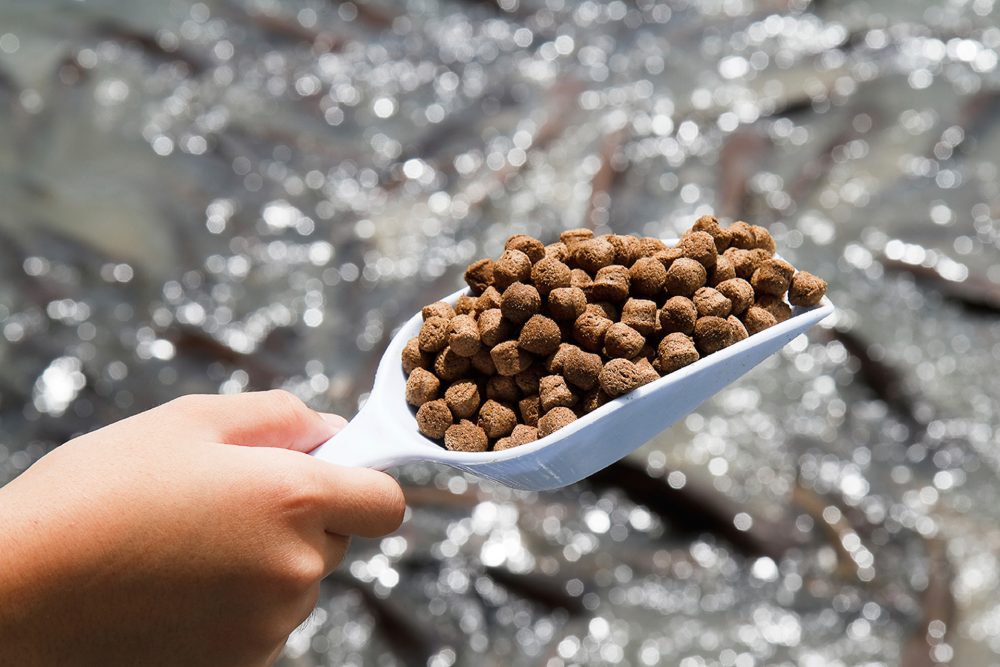
Because we buy and analyse everything that goes into our fish feed, we know what went into it and what was used to produce it. We can influence farming practices that minimise the levels of pesticides to ensure that everything that goes into our feed is healthy and wholesome.
We can also monitor all the marine ingredients coming into our supply chain to ensure that they meet the high standards we require and are not affected by the marine pollution that can accumulate in the wider ocean environment.
We also source organic ingredients to create feeds that meet organic standards to produce certified organic salmon products.

Using the world’s biggest salmon research facility to formulate the feeds of the future
Mowi 4.0 will give us unprecedented insight into precisely how our salmon behave and how they respond to different feeds and adjust to different conditions.
We have more salmon in more locations than anyone else on the planet. And our farms are being equipped with the most advanced technology to monitor their health, growth and well-being. We also have a steady stream of advanced data coming from state-of-the-art monitoring at our advanced production facilities around the world.
This unique overview of the salmon supply chain feeds our understanding. It enables us to tailor specific feeds to specific needs in different locations and at specific stages in the salmon’s lifecycle. It also means we can continually improve the performance of each of our farms and enhance the quality of the fish they produce.
Cleaning our fish oil, unlike any of our competitors
For farm-raised salmon, the main source of dioxins and dioxin-like PCBs is fish oil. Even though farm-raised salmon feeds meet levels well below the European maximum limit of 6,5pg TEQ/g for dioxins and dioxin-like PCBs, Mowi cleans the fish oils sourced from the Northern Hemisphere.
This ensures that one of the key ingredients in salmon feed is free from persistent organic pollutants (POPs). We are unique in doing this and, by setting this higher standard, we will always be ahead of intake limitations and set a benchmark for improvements in competitors’ performance.
In 2018, the European Food Safety Authority, EFSA, published a new risk assessment. It recommends changing the tolerable weekly intake (TWI) for the sum of dioxins and dioxin-like PCBs in foodstuff from today’s 14pg per kilogram bodyweight a week to 2pg per kilogram bodyweight a week.
We anticipate that the EU will reduce the maximum limits of dioxins and dioxin-like PCBs in feed and food, as a consequence of the reduced TWI.
Mowi follows the ongoing regulative process closely, and we expected a first draft of the new regulation to be published in 2020; however, this has been delayed.
Mowi will implement the new regulation accordingly for farm-raised salmon.
Introducing the Fourth R: Reduce, Reuse, Recycle – and Recapture
The concept of Reduce, Reuse and Recycle is a practical guide for the responsible use of planetary resources. When it comes to marine resource management, an additional ‘R’ can also make an important contribution – that of ‘Recaptured’ fishmeal (FM) and fish oil (FO).
Mowi Nutrition has recently been able to implement this fourth R by producing FM and FO from our farmed salmon by-products and trimmings, which is subsequently made available to other applications through global markets. This efficiency helps reduce our environmental footprint and helps align us with #12 of the Sustainable Development Goals: to “Ensure sustainable consumption and production patterns”. With 25–30% of global food production currently being wasted, this is a target that all food sectors must strive to meet, united in a shared goal of “doing more and better with less”.
A common metric for measuring the responsible use of FM/FO in aquaculture is the Fish In-Fish Out (FIFO) ratio, which compares wild fish inputs with farmed fish outputs. Although the concept is simple at heart, it is more complex in practice, but it is a useful way to begin to account for FM/FO resource efficiency.
Since the FIFO concept first arose in the 2000s, technological improvements have been realised across the entire FM/FO value-chain. The recapture of FM/FO from farmed fish takes this process a step further; we call this the RecaptureFIFO (rFIFO), a metric that more accurately reflects the ‘net’ use of FM/FO. In 2021 ~41,000 tonnes of by-products were upcycled to FM and FO used in (non-salmon)
aquaculture and pet feed, which results in an rFIFO of 0.68. By implementing the fourth R across the group, our aim is to keep giving back into the global fund of marine ingredients – and to continue “doing more and better with less”.